Sunday, November 11, 2012

Pennies in a Bank

Children develop their fine motor skills in many ways!  Here we offered a work on our practical life shelves that is fun and functional!  The child takes the basket to a table and places the pennies into the slot on top of the piggy bank.  This repeated motor action develops muscle memory and helps with hand-eye coordination.  When all of the pennies are gone, they turn over the bank, pull out the cork, empty the pennies and repeat if desired. 

Saturday, November 3, 2012

Afternoon Work

 As an extension of reptile work the afternoon children began a study of dinosaurs.  We have many, many books about dinosaurs and also have a 5 year old dinosaur expert in the class!  After reading a book introducing dinosaurs, we showed the children these x-rays of dinosaur skeletons.  This proved they were vertebrates as well as we could see the backbone.  The children really enjoyed turning the light out and turning on the flashlight to see the skeleton. 
 We introduced two dinosaurs a day with a small model and a paper to color.
 We used the Dinopedia to read about the specific dinosaur we were talking about.  We learned about herbivores and carnivores as well!

As another extension of reptile study, we took a field trip to the Great Lakes Zoological Society to see many examples of real reptiles!  http://www.glzszoo.com/

 Feeling a shedded snake skin!
 Blue tongued skink!
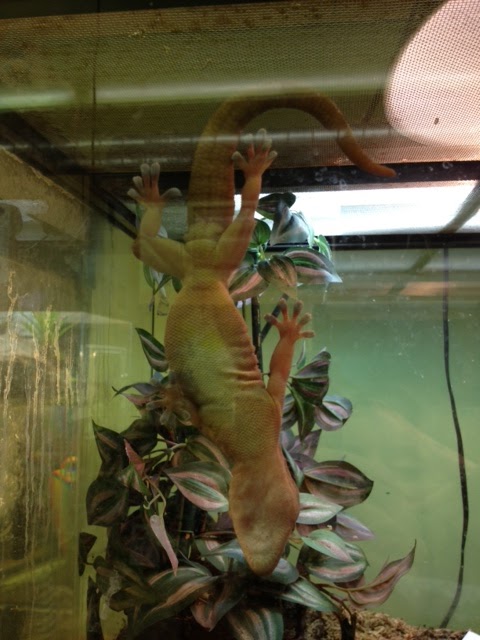
Another Gecko.  This one is just hanging around!
 
Afternoon children are usually ages 4 and 5 who are ready for more intensive study of the topics we are talking about in the morning.  We also learn more math, language and science in the afternoons!

Reptiles!! Another vertebrate!

 This week we moved on from amphibians to our second vertebrate- reptiles!  We have a 3-D reptile book to look at!!
 Titi the Gecko came to visit again! (THANK YOU!)
 The children looked at various model reptiles.
Parts of a lizard book!
Matching types of reptile cards.

necklace making with names!

As necklace making has become quite popular (a great fine motor stringing activity), we decided to add names to the work.  Here the child take the basket with everyone's names written on paper to the table.  They take the necklace making work to a table and the match up the beads with their name paper.  String on and add other colorful beads if desired.  They were very excited about this work and proud of their names!

"Following the Child" An example

In order to maintain interest in a task such as using the moveable alphabet and writing, sometimes a teacher has to find ways to motivate the child.  (Especially children who are very capable and do not like to make a mistake!)  This can be done by finding something they are interested in such as sewing and making it into something that also involves a "work" they should begin to do as well.  We have several children interested in sewing and decided to have them sew a "stuffed animal" as long a they wrote a story about it at the end. 
 First up was drawing the creation on paper. 
 The child then cut out the animal and we traced onto material.  We used a hoop to make the fabric stable while the child sewed their animal.  While doing this the child is thinking about their character, title, story line, etc for their book.
Here is a photo of the first stuffed animal!  This child wrote a story by telling me the words to write but has now been using the moveable alphabet!  We have three other stuffed animal creations and stories going.  They may be done by the end of this month!  Exciting!!

Brass Polishing- something from home

This child has experienced the multiple step brass polishing work at school since September.  She asked if she could bring something from home to polish!  YES!!  It is amazing when it all comes together!!

Short Bead Frame

The blend of ages in a Montessori classroom is amazing.  We have 2 1/2 to five year olds this year and it is such a lovely mix.  Since we have Kindergarten aged children, it is important to keep them challenged and progressing along the learning path!  Here this child is doing static (without change) addition in the thousands with the help of the small bead frame.  This child has progressed through many of the brilliant Montessori math materials and is now ready to add numbers in the thousands.  This apparatus helps the child add in a concrete way.  Soon he will begin to add in the thousands abstractly but for now this helps him to complete many equations without stress and the demands of jumping to abstraction.  This helps the child to truly understand how he is coming up with the sum of the two addends.  He will complete dynamic addition soon which is when he has to borrow.  The same materials will be used.